The New ChatGPT Models in 2026: GPT-5.6 (Sol, Terra and Luna), GPT-Live and ChatGPT Work


Table of Contents
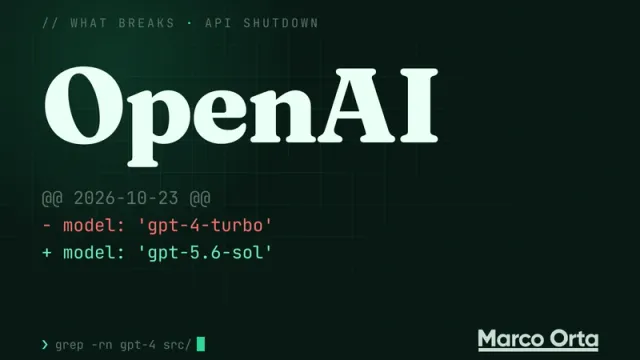
In July 2026 OpenAI overhauled ChatGPT top to bottom: the GPT-5.6 family arrived —three models named Sol, Terra and Luna—, along with a new “ultra” mode that coordinates several agents in parallel, full-duplex GPT-Live voice, and ChatGPT Work, an agent that works directly on top of your apps. This isn’t a simple point-release tweak: it’s the biggest leap since GPT-5, and it changes both what you can do with ChatGPT and what it costs to do it.
Update, 5 September 2026. OpenAI shipped GPT-6 Astra on 3 September. It does not supersede what is covered here: Astra is the expensive long-reasoning and computer-use model ($10/$50 per million), while the 5.6 family remains the price/performance tier for everyday work. What Astra changes for developers — the 2x surcharge past 272K tokens, the access gating, and the services it does not support — is in GPT-6 Astra for developers.
In this guide I’ll sort out the mess —what launched, when, and what each piece is for— with no hype and from the perspective of someone who ships these models in real products. By the end you’ll know which model to pick for your case, and you’ll be able to estimate your cost with the AI cost calculator.
The ChatGPT model timeline in 2026
In a matter of months OpenAI went from GPT-5 to a whole constellation of models. This is the real order of the releases:
- GPT-5.5 Thinking and GPT-5.5 Pro — April 23, 2026. The reasoning models; they hit the API a day later.
- GPT-5.5 Instant — May 5, 2026. The fast model that became ChatGPT’s default for everyone, including the free tier.
- GPT-Live — July 8, 2026. The new voice generation, replacing Advanced Voice Mode.
- GPT-5.6 (Sol, Terra and Luna) — July 9, 2026. The new flagship family, available at once in ChatGPT, in Codex, and in the self-serve API.
- ChatGPT Work — unveiled alongside GPT-5.6, an agent for office work.
The lesson for anyone building software: models no longer ship “once a year.” They ship every few weeks, and with new names. It’s worth designing your integration so you can swap models without rewriting half your project.
GPT-5.6: the new flagship family (Sol, Terra and Luna)
GPT-5.6 isn’t a single model but three, designed to cover the price/quality curve end to end:
| Model | Role | Input price (1M tokens) | Output price (1M tokens) |
|---|---|---|---|
| Sol | Flagship. Top capability in reasoning, coding and agent tasks | $4 | $20 |
| Terra | Balanced. A capable model for everyday work at a lower cost | $2 | $12 |
| Luna | The fastest and cheapest. Handles the same tasks as Sol 17 to 20 times cheaper | $0.20 | $1.20 |
These are the prices in effect as of September 2026, lower than at launch. Sol’s price is promotional: a 20% cut on input and 33% on output that OpenAI keeps in place at least through November 21, 2026. If your budget runs past that date, check OpenAI’s pricing page.
The numbers that matter, beyond the marketing:
- Sol is the spearhead. According to Sam Altman, it’s 54% more token-efficient for AI coding tasks than its predecessor, meaning it does more with less —and therefore cheaper— despite its higher per-token price.
- It sets benchmark records. Sol scores 80 points on Artificial Analysis’s Coding Agent Index (2.8 above Fable 5 while using less than half the output tokens, in less than half the time, and at about one-third less cost), 92.2% on BrowseComp (web browsing), and 62.6% on OSWorld 2.0 (operating real software).
- It’s OpenAI’s strongest cybersecurity model yet, geared toward defensive tasks: threat modeling, code review and patching, and blue teaming.
The practical takeaway: don’t use Sol for everything. To classify emails, summarize, or answer FAQs, Luna does the job at a fraction of the cost. Sol makes sense when you genuinely need its brain —complex code, research, multi-step agent tasks—. Before deciding, run the numbers with the AI cost calculator; for the full pricing context, read my guide on how much the OpenAI, Claude and Gemini APIs cost in 2026.
What actually changed: ultra mode and subagents
The headline isn’t the version number, but a genuinely new capability class: ultra mode. It’s GPT-5.6’s highest-capability setting, and it doesn’t just “think harder”: it coordinates several agents in parallel. By default it spins up four agents that work simultaneously on different branches of the problem and then synthesize their work into a single answer.
In the API the equivalent lives in the multi-agent beta of the Responses API: GPT-5.6 can run concurrent subagents and merge their results within a single request. Alongside it came other developer-facing pieces:
- Programmatic Tool Calling — the model orchestrates tool calls programmatically.
- Pro mode and persistent reasoning — for long tasks that don’t fit in a single turn.
- Prompt cache breakpoints — to cut the cost of long, repeated prompts.
If this reminds you of the agentic AI I already wrote about, that’s because it’s exactly that: OpenAI is baking the agent-with-subagents pattern into the model itself. What you used to wire up by hand now comes built in. The usual warning: more agents = more calls = more tokens. Ultra mode is powerful, but it’s also the fastest way to blow up your bill if you use it without measuring.
GPT-Live: voice that listens and speaks at once
GPT-Live is the new generation of voice models, and its big difference is that they’re full-duplex: they listen and speak at the same time. That completely changes the feel compared to the old Advanced Voice Mode, which it replaces:
- You can interrupt naturally, like in a real conversation, without waiting for the model to finish speaking.
- It enables live translation and fluid back-and-forth dialogue.
- It delegates search and reasoning to GPT-5.5 when the question calls for it, so the conversation stays snappy while still having a brain behind it.
For businesses, this brings the “real” voice assistant —phone reception, spoken support, accessibility— much closer to something usable, without the awkwardness of rigid turns.
ChatGPT Work: the agent that works with your apps
Alongside the models, OpenAI launched ChatGPT Work, a GPT-5.6-powered agent built for office work. The idea: instead of copy-pasting between ChatGPT and your tools, the agent connects to them:
- It integrates Slack, Gmail, Google Drive, Notion, Microsoft 365 and the most common CRMs.
- It gathers context from those apps and files to create documents, presentations and spreadsheets directly.
- It rolls out in phases: desktop first (including free users), and web and mobile for Pro, Enterprise, Plus and Business in the following days/weeks.
Strategically, ChatGPT Work is OpenAI’s direct answer to Anthropic’s Claude Cowork: the 2026 battle is no longer “who has the smartest chatbot,” but who has the best agent that works for you.
Which ChatGPT model to choose in 2026
If you’re going to integrate these models —or simply pick a plan— here’s my practical recommendation:
- For most tasks: Luna or Terra. Classify, summarize, answer, extract data. Start with the small model and only move up if quality falls short. It’s the same rule of thumb I apply when building AI agents.
- For the hard stuff: Sol. Complex code, analysis, research with browsing, multi-step agent tasks. Its token efficiency offsets a good chunk of the higher price.
- Ultra mode, with care. Reserve parallel subagents for jobs that genuinely benefit from divide-and-conquer. Measure it before letting it loose in production.
- Voice, with GPT-Live. If your use case is telephone or accessibility, this is where the real leap is.
And the rule that doesn’t change with any version: measure tokens and cost per task from day one. A cheaper model used badly costs more than an expensive one kept tight. If you come from PHP and want a first hands-on with code, I have a guide on how to integrate the OpenAI API with Laravel.
What this means for your business
Beyond the version race, three useful conclusions:
- Quality went up and cost went down at the same time. With Luna at $0.20/$1.20 per million tokens, automating repetitive tasks is cheaper than ever. What was hard to justify a year ago now pays off.
- The agent is the new product. ChatGPT Work and ultra mode all point to the same thing: AI stops answering and starts doing. Whoever gets a well-scoped agent running over their processes first gains an edge.
- The pace of change is the real challenge. Five releases in one quarter. The way to keep up isn’t to chase every model, but to have a clean integration that lets you swap models when the next one lands —because it will land soon.
Want to explore which of this fits your operation? Take a look at my AI automation service for businesses and tell me which process is eating your hours.
Conclusion
The new ChatGPT models in 2026 draw a clear trend: more capability, less cost and, above all, more autonomy. GPT-5.6 bakes the agent-with-subagents pattern into the model itself, GPT-Live makes talking to AI feel like a real conversation, and ChatGPT Work sits it down to work directly on top of your apps.
But the most useful takeaway isn’t any of those names: it’s realizing that the release cycle sped up so much that the specific model is no longer the important decision. What matters is having a measured, scoped, easy-to-update integration. Do that, and every new model that ships —and they’ll ship fast— becomes an improvement you cash in within hours, not a headache.
Want to put any of these models to work in your business? Let’s talk: check out my AI automation service for businesses and tell me what you want to automate.
Found it useful? Get the next one by email
Once a week: what breaks when you upgrade, AI for developers and what I'm building, with sources. No spam.
By subscribing you accept our privacy policy.